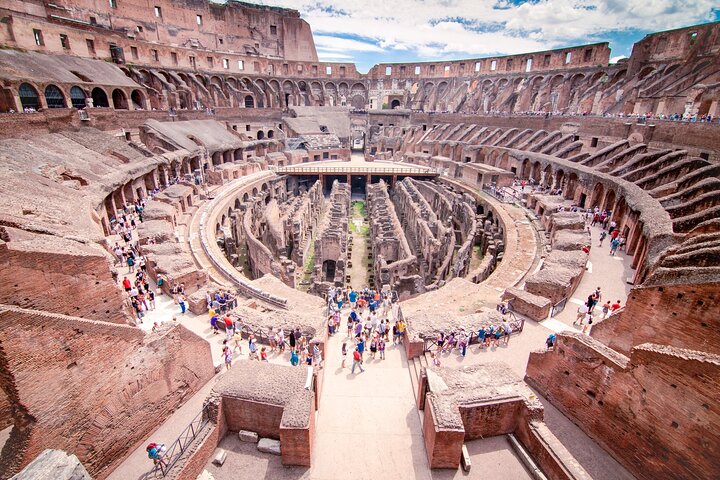
The Colosseum was originally known as the Flavian Amphitheatre. Built during the first century CE under the Flavian emperors, it was designed for large public spectacles in Imperial Rome. Its elliptical architecture organised entrances, circulation, seating, and the arena as parts of one engineered public building whose surviving fabric still reveals different construction and restoration phases.
Its surviving structure reflects Roman engineering, public entertainment, and the political importance of spectacle. The monument was altered and reused over many centuries before becoming the managed archaeological site visitors encounter today. Later reuse, stone removal, repairs, archaeological study, and conservation all shaped what can be seen today, so the monument should not be treated as an unchanged survival from a single moment.
The Colosseum forms part of Rome’s UNESCO-listed historic centre and sits within a wider archaeological landscape that includes the Roman Forum and Palatine Hill. The Colosseum also belongs to the wider Archaeological Park with the Roman Forum and Palatine Hill; that setting explains why combined visits need route, terrain, and access planning beyond the amphitheatre itself.